
 Dokdo researcher, Park Cheon Yeol, from MBC Pohang Park Cheon Yeol produced a documentary titled ‘Dokdo Data War’ in late 2023. Through his research Mr Park discovered an NGO owned and operated online Dokdo Database with numerous pages of data supporting Korea’s claim to Dokdo Island. Mr Park’s curiosity led him to Canada where the webmaster, Steven J Barber resides.
Not long after, North Gyeongsan Province would award Mr Barber with the 2023 Dokdo Peace Award. Mr Park would accept the award on behalf of Mr Barber. It seems, www.dokdo-takeshima.com had attracted the attention of the Dokdo Foundation after about 17 years of being online.
But how did this website begin…?


 By this time Korean media and the Northeast Asia History Foundation had taken note of Mr Barber’s efforts and offered their thanks and support. The Northeast Asia History Foundation would prove to be an important supporter of the website. The NAHF would eventually support research field trips to both Ulleungdo and Dokdo.
One member Professor Kwak Gu Yeong offered to help with some translations. Both Japanese and Korean netizens were instrumental in the creation of this website. Much of the data comes from Japanese online databases that support Takeshima lobbyists. Those records were not presented in their entirety or incorrectly interpreted.

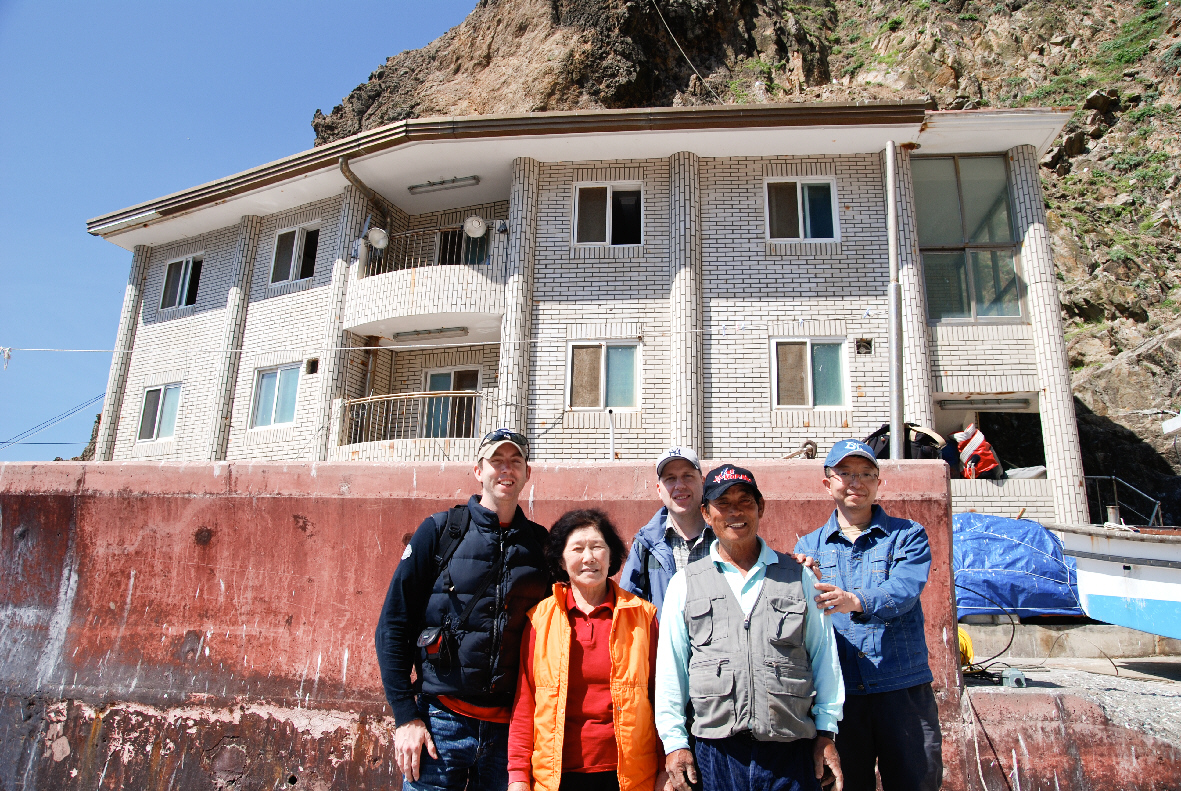
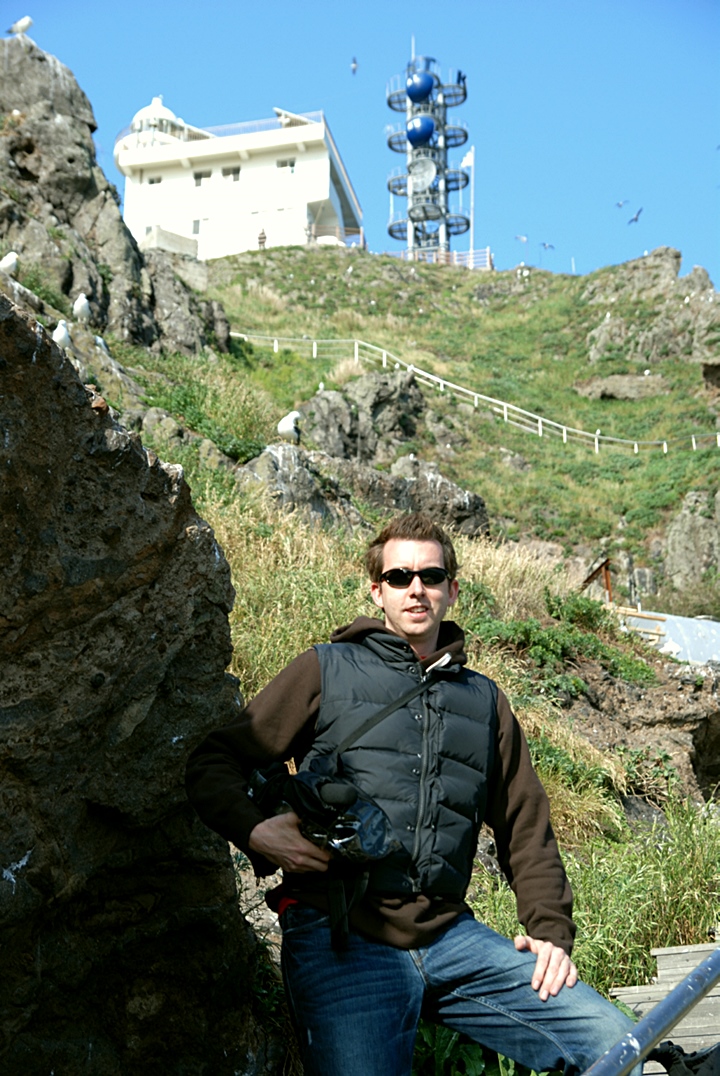 Web Designer – Entrepreneur ~ Ryan Saley
Ryan Saley, now working in Seoul, South Korea, is a Canadian who is fully involved with dokdo-takeshima.com. Ryan is a web designer with over decades of experience in media and business. The creation of this website would not have been possible without the technical support and input from Ryan.
Ryan Saley (right) stands under the military watchtower on the eastern side of the small island during a visit to Dokdo in May 2009.
 Japanese Professor~Hosaka Yuji
Hosaka Yuju was born in Tokyo, Japan. He gradated from the University of Tokyo in 1979 and moved to Seoul to research relations between South Korea and Japan in 1988. Professor Hosaka obtained an M.A. and Ph. D. at the Department of Political Science and International Relations of Korea University. After residing in South Korea for 15 years, he became a naturalized South Korean in 2003. He later received the Minister of Foreign Affairs and Trade Award in 2005.
Professor Hosaka Yuji is currently, a professor of the College of Liberal Arts at Sejong University (Japanology). Professor Hosaka has written numerous publication related to the Dokdo – Takeshima dispute such as ‘There’s No Dokdo Even On Ancient Japanese Maps’ (2005. Jaeum & Moeum Publishing) and the article ‘A Study on the Legitimacy of the Peace Line’.
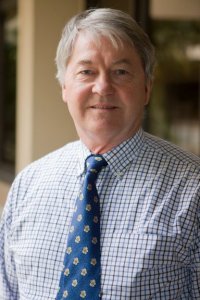 American Professor ~ Jon M. Van Dyke
Professor of Law, Carlsmith Ball Faculty Scholar, Regents’ Medalist for Excellence in Research, Presidential Citation for Excellence in Teaching. Jon M. Van Dyke’s educational background includes BA, cum laude, Yale University, 1964 and JD, cum laude, Harvard Law School, 1967. Professor Van Dyke has extensive knowledge and background in areas of expertise related to the Dokdo Takeshima dispute such as colonial era land annexations (ie Hawaii) Maritime Boundary Disputes, International Law and Laws of the Sea.
Sadly, Professor Jon M Van Dyke passed away in 2011. However, his legacy continues through his numerous works inspiring us to question the validity of Japan’s colonial era land claims.
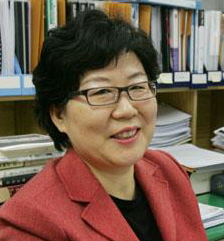 Korean Maritime Institute Researcher ~ Ms. Yu Mi Rim
Ms. Yu Mi Rim works at the Korea Maritime Institute of Marine Research Center and deals with territorial issues. She has been researching the Dokdo Takeshima dispute for a long time and still Ms. Yu remains a dedicated researcher. Recently, with a historical record related to Japan’s Oki Islands she proved without a doubt Japan has no historical title to Dokdo. This record also showed Japan’s 1905 annexation of Dokdo was a territorial expansion of Japan’s previous boundary. ( see link )
Ms. Yu has also done historical research related to post WWII and Dokdo Island and hopefully we will present some of her research on this time era in the future.
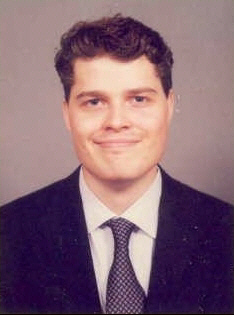 American School Teacher~Mark Lovmo
Mark Lovmo, a teacher at a Minneapolis primary school, is now operating an independent Web site about Dokdo, which is also claimed by Japan. His website can be found here see link Often referred to as “The Original Dokdo Man”, Mr Lovmo was one of the first westerners to study the historical background and origins of the Dokdo – Takeshima problem.
Mr Lovmo also wrote ‘A Timeline of American Actions Regarding Dokdo’ which detail Post WWII Allied Command policy on Dokdo. Having discovered many confidential documents, his article remains one of the best-researched writings detailing Post WWII, U.S. Government-Military policy related to Dokdo – Takeshima.
The Japanese researchers listed above must be commended for having the integrity to confront their own government’s false claims toward Dokdo Takeshima Island. It was through their published articles found in various editions of ‘The Korean Observer’, that Dokdo-Takeshima.com researchers were able to source original Japanese wartime documents from Japan’s National Archives. These maps and records were instrumental in proving Japan’s current claim to Dokdo Takeshima and her annexation of the Korean peninsula were inseparable.
 This is not an anti Japanese website!
Although some articles are critical of the Japanese Government, I harbor no bad feelings toward the people of Japan. I can honestly say after years of online debating about Dokdo, Japanese people have been very respectful toward me. So, I created this website to present Korea’s side of the Dokdo Takeshima dispute free of nationalist rants and hostility. I hope you will find this data informative and educational.

